


 View product
Glutathione: reconstitution volume 10 ml
Because of the limited solubility of glutathione, 10 ml of bacteriostatic water per vial is the appropriate reconstitution volume (600 mg and 1500 mg). At 1500 mg the concentration exceeds the solubility at 2–8 °C, so the solution may crystallise when refrigerated. This is a physical phenomenon and not a quality defect: at room temperature the glutathione goes back into solution completely.

 4.5/5on Trustpilot· Verified reviews
Ordered before 17:00, shipped todayOrder now, shipped Friday
Order todayNow
ShippingFriday 20 Nov.
Expected deliverySaturday 21 Nov.
Carefully packagedTrack & TraceShipped from the EU
4.5/5on Trustpilot · Verified reviews
Collection G
Glutathione
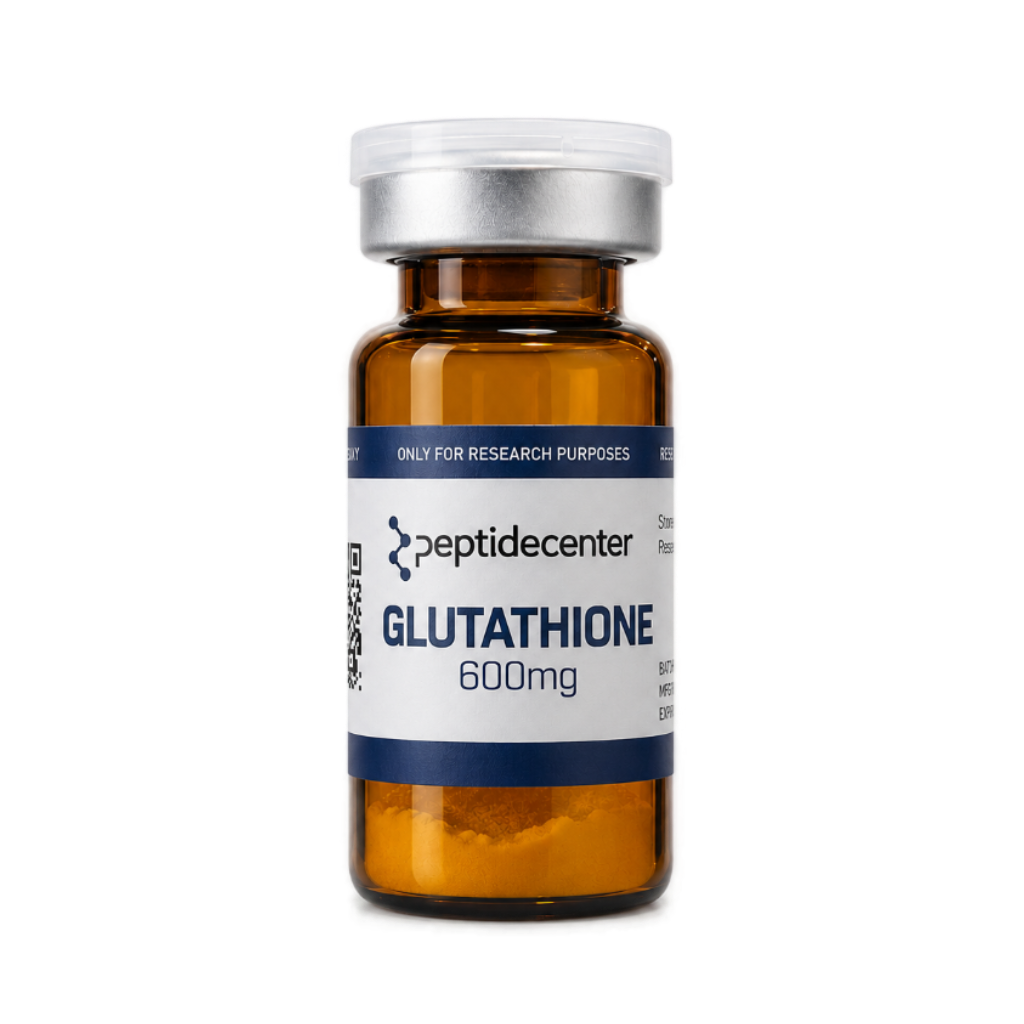
Buy glutathione (GSH): in the literature, it is all about antioxidants in the cell. The body makes the substance itself to clear away harmful compounds. Vials of 600 and 1500 mg, ≧99% pure.
4.5/5on Trustpilot· Verified reviews
Ordered before 17:00, shipped todayOrder now, shipped Friday
Order todayNow
ShippingFriday 20 Nov.
Expected deliverySaturday 21 Nov.
Carefully packagedTrack & TraceShipped from the EU
4.5/5on Trustpilot · Verified reviews
Why choose Glutathione?
- Tripeptide of three amino acids: glutamic acid, cysteine and glycine
- Two vial sizes: 600 mg and 1500 mg
- Purity ≧99%, supplied as freeze-dried powder
- With every peptide product, you receive 3 ml of bacteriostatic water for free.
- Carefully packaged, shipped from our EU warehouse. Ordered before 17:00, shipped today.
Product information
What is Glutathione (GSH, L-glutathione)?
Glutathione, also known as L-glutathione, is a small peptide that occurs naturally in cells. The abbreviation GSH describes its reduced form, which has a free sulphur-containing group. This group plays an important part in chemical reactions. Glutathione is widely studied in relation to oxidation and reduction, reactions involving the transfer of electrons. During these reactions, GSH can change into GSSG, its oxidised form. The two names describe different forms within the same chemical cycle, each with its own molecular structure.
| Name | Glutathione |
|---|---|
| Also known as | GSH, glutathione, L-glutathione, reduced glutathione |
| CAS number | 70-18-8 |
| Molecular formula | C10H17N3O6S |
| Molecular weight | 307.33 g/mol |
| Number of amino acids | 3 |
| Sequence | γ-Glu-Cys-Gly |
| Available vials | 600 mg and 1500 mg |
| Purity | ≧99% |
| Form | Lyophilisate (freeze-dried powder) |
| Appearance | White to off-white powder |
| Solvent | Bacteriostatic water |
| Reconstitution volume | At least 10 ml of bacteriostatic water per vial (600 mg and 1500 mg) |
| Unopened storage | Store at 2–8 °C, in a dry and dark place. |
| Long-term storage | -20 °C, only in powder form |
| After reconstitution | Keep refrigerated at 2–8 °C. Quality declines after approximately 30 days. |
| Use | For laboratory research only |
How is Glutathione structured?
Glutathione consists of connected amino acids, the building blocks of peptides. One of its connections passes through a side branch of a building block. This differs from the usual connection within a peptide chain. The unusual link is important for recognition by certain enzymes. Glutathione also contains a thiol group, a group with a sulphur atom that can take part in reactions. Two glutathione molecules can become joined through their sulphur atoms. This produces a different form of the compound, linking two separate units together.
What does the research examine?
Glutathione research includes the relationship between GSH and GSSG. Researchers examine how the sulphur-containing groups react and how the resulting connection is broken again. Glutathione reductase is the enzyme that helps turn the linked form back into GSH. It receives help from NADPH, a coenzyme that supplies electrons. Other studies examine enzymes that recognise glutathione and remove parts of the molecule. The central topics are therefore electron transfer, the connection between sulphur atoms and the breakdown of the compound by specific enzymes.
How does it differ from S-acetylglutathione and liposomal glutathione?
S-acetylglutathione, also written as S-acetyl-L-glutathione, has an additional chemical group attached to its sulphur atom. This changes the free sulphur-containing group found in GSH. It is a modification of the molecule itself. Liposomal glutathione differs in its surrounding structure: the glutathione is incorporated into small lipid structures. The word liposomal describes how the compound is packaged within a formulation. GSSG is another form, consisting of two glutathione units connected through sulphur. These names therefore describe different types of changes involving the same underlying compound.
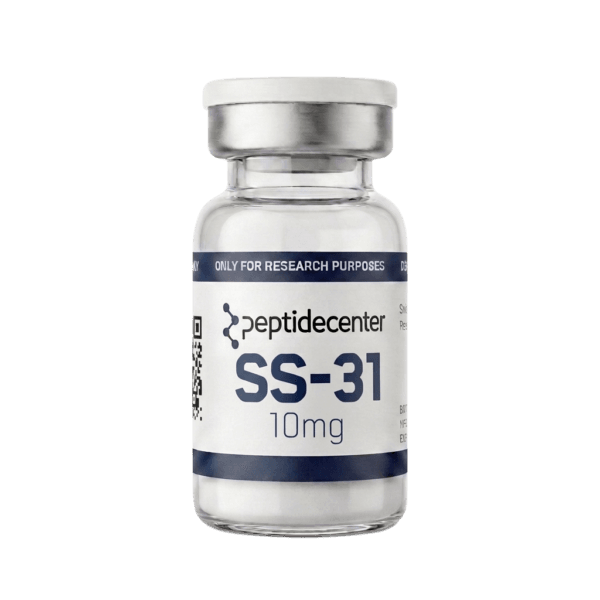
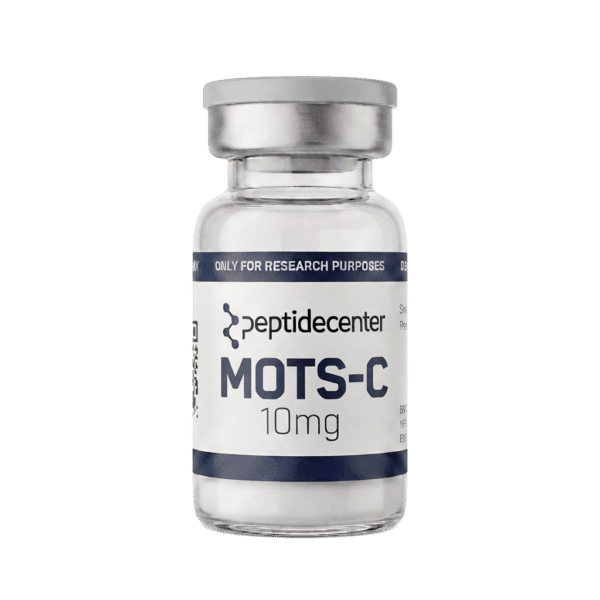
Related products in our assortment are SS-31, MOTS-c and GHK-Cu. How to dissolve the powder with bacteriostatic water is explained in our reconstitution and storage guide. The full range is listed under Collection G.
Product reviews
5.0
1 review
1 review for Glutathione
Only logged in customers who have purchased this product may leave a review.
Frequently Asked Questions
What is glutathione?
A small peptide of three amino acids that the body makes itself, mainly in the liver. In the literature you will usually see the abbreviation GSH.
What do GSH and GSSG mean?
GSH is glutathione with a free sulphur-containing group. GSSG consists of two glutathione units joined through their sulphur atoms.
Is S-acetylglutathione the same as liposomal glutathione?
No. S-acetylglutathione has a chemical modification to the molecule. Liposomal describes an enclosing structure made from lipids.
Why is it called a tripeptide?
Because it consists of three amino acids. Tri means three. In glutathione these are glutamic acid, cysteine and glycine.
Why do crystals form in the fridge?
The solubility of glutathione in water is approximately 130 mg/ml at room temperature and approximately 80 mg/ml at 2–8 °C. A 1500 mg vial in 10 ml (150 mg/ml) is clear at room temperature but supersaturated when refrigerated, so part of it precipitates as crystals. This is a physical phenomenon and not a quality defect: at room temperature the glutathione goes back into solution completely. A 600 mg vial in 10 ml (60 mg/ml) also stays clear when refrigerated.
How do you store glutathione?
Unopened, keep it cool, dry and away from light at 2 to 8 °C. For longer storage -20 °C is suitable, powder form only. After reconstitution keep the vial refrigerated at 2 to 8 °C; quality declines after roughly 30 days.
Need help?
Our team is ready to help you with questions about products, orders, or research.


wendyvanlit@ziggo.nl (verified owner) –