


 View product


 4.5/5on Trustpilot· Verified reviews
Ordered before 17:00, shipped todayOrder now, shipped Friday
Order todayNow
ShippingFriday 20 Nov.
Expected deliverySaturday 21 Nov.
Carefully packagedTrack & TraceShipped from the EU
4.5/5on Trustpilot · Verified reviews
METABOLISM & WEIGHT
Tesamorelin
Buy Tesamorelin (TH-9507): the compound from the growth hormone release corner. A modified form of GHRH, the hormone that drives that release. Vials of 5, 10 and 20 mg, ≧99% pure.
4.5/5on Trustpilot· Verified reviews
Ordered before 17:00, shipped todayOrder now, shipped Friday
Order todayNow
ShippingFriday 20 Nov.
Expected deliverySaturday 21 Nov.
Carefully packagedTrack & TraceShipped from the EU
4.5/5on Trustpilot · Verified reviews
Why choose Tesamorelin?
- Synthetic GHRH analogue with all 44 amino acids and a trans-3-hexenoyl group
- Three vial sizes: 5, 10 and 20 mg
- Purity ≧99%, supplied as freeze-dried powder
- With every peptide product, you receive 3 ml of bacteriostatic water for free.
- Carefully packaged, shipped from our EU warehouse. Ordered before 17:00, shipped today.
Product information
What is Tesamorelin (tesamorelin peptide)?
Tesamorelin is a synthetic peptide based on the natural hormone GHRH. This hormone signals cells to release growth hormone. Tesamorelin belongs to the GHRH analogues, a group of compounds resembling the original hormone. It also appears in research under the name TH-9507. The term tesamorelin peptide refers to the same molecule. Research in this area examines how cells recognise signals. The main focus is the relationship between the shape of the peptide and the receptor that recognises it.
| Name | Tesamorelin |
|---|---|
| Also known as | TH-9507, Egrifta, modified GHRH(1-44) analogue |
| CAS number | 218949-48-5 |
| Molecular formula | C221H366N72O67S |
| Molecular weight | 5135.9 g/mol |
| Number of amino acids | 44 |
| Sequence | YADAIFTNSYRKVLGQLSARKLLQDIMSRQQGESNQERGARARL (with N-terminal trans-3-hexenoyl group) |
| Available vials | 5 mg, 10 mg and 20 mg |
| Purity | ≧99% |
| Form | Lyophilisate (freeze-dried powder) |
| Appearance | White to off-white powder |
| Solvent | Bacteriostatic water |
| Unopened storage | Store at 2–8 °C, in a dry and dark place. |
| Long-term storage | -20 °C, only in powder form |
| After reconstitution | Keep refrigerated at 2–8 °C. Quality declines after approximately 30 days. |
| Use | For laboratory research only |
How is Tesamorelin structured?
The molecule is built from a chain of amino acids, the building blocks of peptides. An additional chemical group is attached to the beginning of this chain. This group forms part of the molecule and changes the properties of that end. The chain contains different types of building blocks. Some carry an electrical charge, while others attract or repel water. Together, they shape the molecule and its contacts with other compounds. This structure helps determine how a receptor recognises the peptide.
What does the research examine?
Tesamorelin research focuses on the GHRH receptor, a protein that recognises signals at the cell surface. After binding, this receptor can pass a signal into the cell. The process involves cAMP, a small molecule that carries the signal further. Researchers examine how binding to the receptor starts this pathway. They also investigate which parts of the peptide contribute to recognition. The central topic is the connection between the structure of tesamorelin and the transfer of a signal from the cell surface to its interior.
How does it differ from Ipamorelin and Sermorelin?
Tesamorelin and ipamorelin belong to the same broad research field, but target different receptors. Tesamorelin binds to the GHRH receptor. Ipamorelin targets the ghrelin receptor, a different protein at the cell surface. Their molecular structures also differ. Sermorelin is more closely related to tesamorelin in structure. Both are based on GHRH, although sermorelin represents a shorter part of the original hormone. Tesamorelin has a longer chain and the additional group at its beginning. These differences provide a basis for research comparing the peptides.
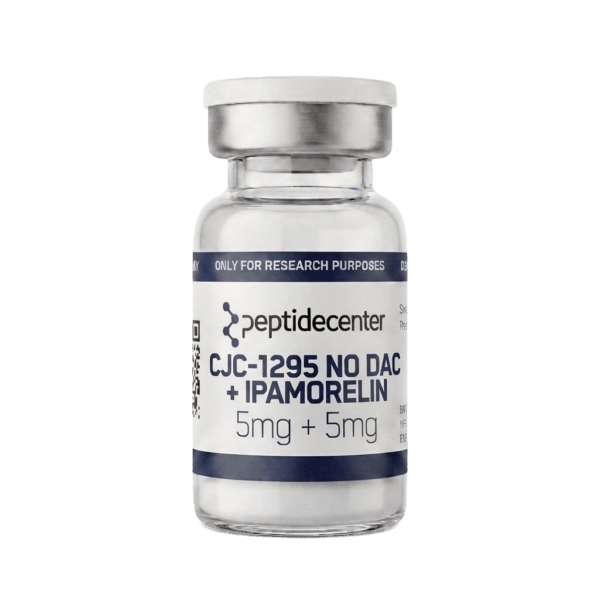
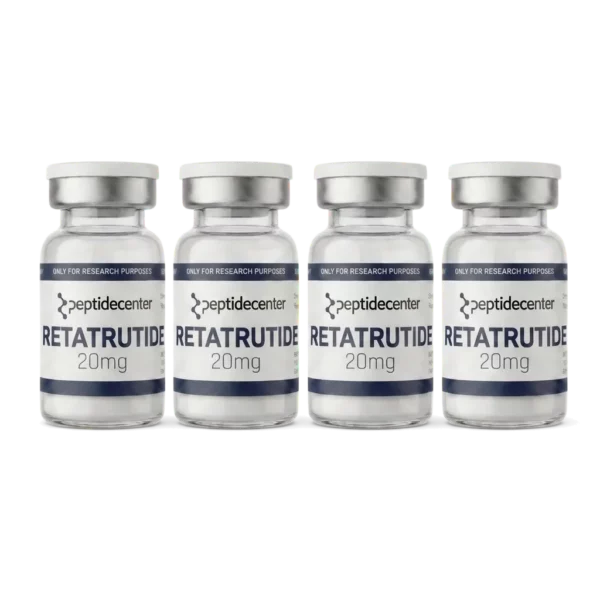
Related products in our assortment are CJC-1295 + Ipamorelin and Retatrutide. How to dissolve the powder with bacteriostatic water is explained in our reconstitution and storage guide. The full range is listed under Metabolism & weight.
Product reviews
4.5
2 reviews
2 reviews for Tesamorelin
Only logged in customers who have purchased this product may leave a review.
Frequently Asked Questions
What is tesamorelin?
Tesamorelin is a synthetic peptide derived from growth hormone-releasing hormone (GHRH). It has 44 amino acids and carries a trans-3-hexenoyl group at the N-terminus.
What is the difference between tesamorelin and ipamorelin?
Tesamorelin targets the GHRH receptor. Ipamorelin targets the ghrelin receptor. They are different peptides with different structures.
Is tesamorelin the same as sermorelin?
No. Both are based on GHRH. Tesamorelin has a longer amino acid chain and an additional chemical group at the beginning.
What does the research code TH-9507 mean?
It is the development code of tesamorelin. Under the brand name Egrifta the substance also became known.
Is tesamorelin an approved medicine?
As Egrifta, tesamorelin is registered in certain countries for a specific medical indication. What we supply is for laboratory research use only.
How do you store tesamorelin?
Unopened, store in a cool, dry, and dark place at 2 to 8 °C. For longer storage, -20 °C is suitable, only in powder form. After dissolving, store the vial refrigerated; the quality of the peptide deteriorates from approximately 30 days.
Need help?
Our team is ready to help you with questions about products, orders, or research.



Shawny (verified owner) –
Dino (verified owner) –